Jack the Ripper
 Who Was Jack the Ripper?

From August 7 to September 10 in 1888, "Jack the Ripper" terrorized the Whitechapel district in London'Jack The Rippers East End. He killed at least five prostitutes and unusually mutilated their bodies, indicating that the killer had a knowledge of human anatomy. Jack the Ripper was never captured and remains one of England's, and the world's, most infamous criminals.
The Murders
Known for committing gruesome murders from August 7 to September 10 in 1888, "Jack the Ripper"—a moniker for the notorious serial killer, who was never identified—remains one of England's, and the world's, most infamous criminals.
The culprit responsible for the murders of five prostitutes—all took place within a mile of each other and involved the districts of Whitechapel, Spitalfields, Aldgate and the City of London—in London's East End in the autumn of 1888 was never apprehended. Despite countless investigations claiming definitive evidence of the brutal killer's identity, his name and motive are still unknown. The moniker "Jack the Ripper" originates from a letter written by someone who claimed to be the Whitechapel butcher, published at the time of the attacks.
 Adding to the mystery of the affair is the fact that several letters were sent by the killer to the London Metropolitan Police Service, also known as the Scotland Yard, taunting officers about his gruesome activities and speculating on murders to come. Various theories about Jack the Ripper's identity have been produced over the past several decades, which include claims accusing the famous Victorian painter Walter Sickert, a Polish migrant and even the grandson of Queen Victoria. Since 1888, more than 100 suspects have been named, contributing to widespread folklore and ghoulish entertainment surrounding the mystery.
In the late 1800s, London's East End was a place that was viewed by citizens with either compassion or utter contempt. Despite being an area where skilled immigrants, mainly Jews and Russians, came to start a new life and start businesses, the district was notorious for squalor, violence, and crime. Prostitution was only illegal if the practice caused a public disturbance, and thousands of brothels and low-rent lodging houses provided sexual services during the late 19th century.
 At that time, the death or murder of a working girl was rarely reported in the press or discussed within polite society. The reality was that "ladies of the night" were subject to physical attacks, which sometimes resulted in death. Among these common violent crimes was the attack of English prostitute Emma Smith, who was beaten and raped with an object by four men. Smith, who later died of peritonitis, is remembered as one of many unfortunate female victims who were killed by gangs demanding protection money.
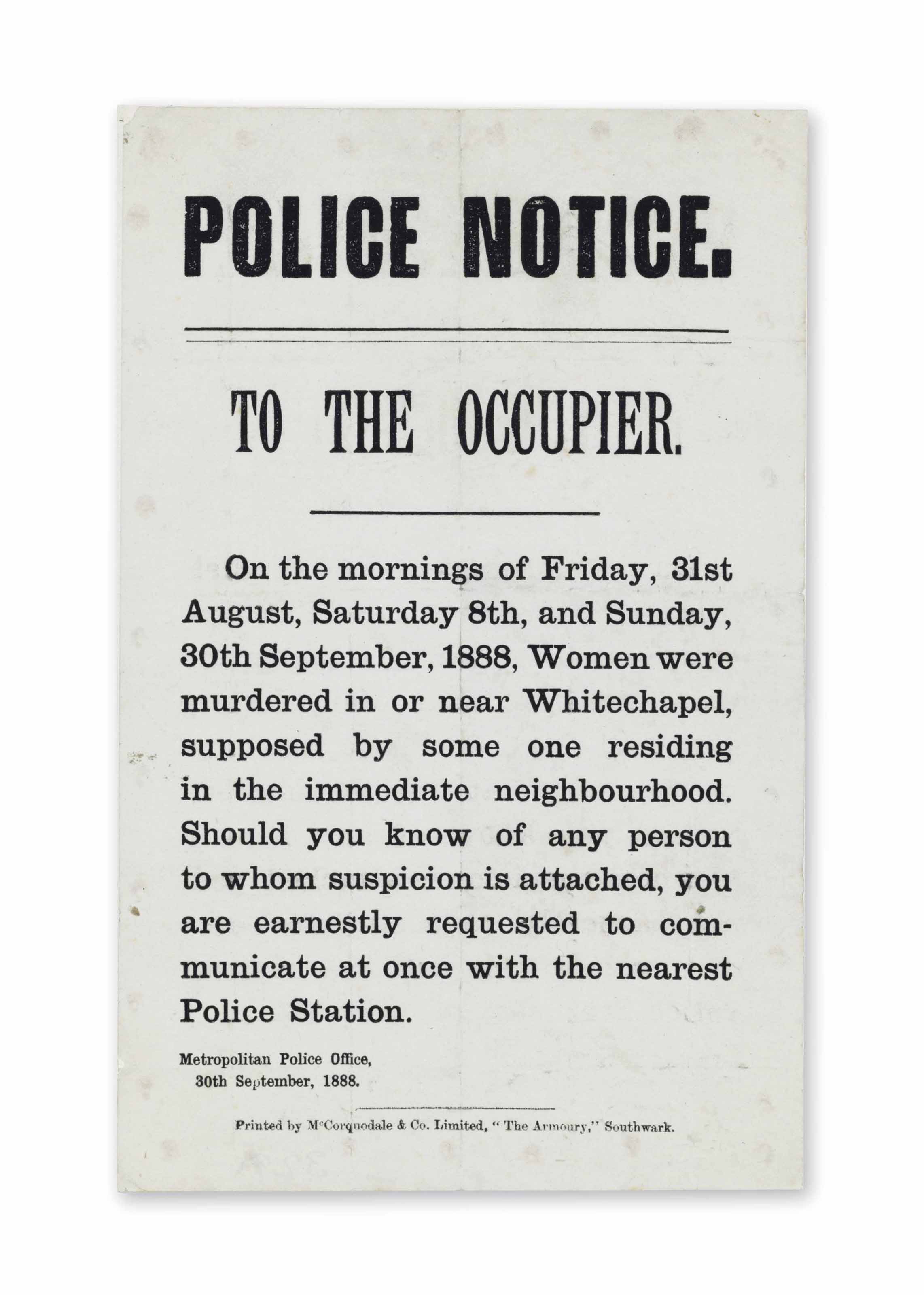 However, the series of killings that began in August 1888 stood out from other violent crimes of the time: They were marked by sadistic butchery, suggesting a mind more sociopathic and hateful than most citizens could comprehend. Jack the Ripper didn't just snuff out life with a knife, he mutilated and humiliated women, and his crimes seemed to portray an abhorrence for the entire female gender.
When Jack the Ripper's murders suddenly stopped, in the fall of 1888, London citizens wanted answers that would not come, even more than a century later. The ongoing case—which has spawned an industry of books, films, TV series and historical tours—has met with several hindrances, including lack of evidence, a gamut of misinformation and false testimony, and tight regulations by the Scotland Yard. Jack the Ripper has been the topic of news stories for more than 130 years, and will likely continue to be for decades to come.
Known for committing gruesome murders from August 7 to September 10 in 1888, "Jack the Ripper"—a moniker for the notorious serial killer, who was never identified—remains one of England's, and the world's, most infamous criminals.
The culprit responsible for the murders of five prostitutes—all took place within a mile of each other and involved the districts of Whitechapel, Spitalfields, Aldgate and the City of London—in London's East End in the autumn of 1888 was never apprehended. Despite countless investigations claiming definitive evidence of the brutal killer's identity, his name and motive are still unknown. The moniker "Jack the Ripper" originates from a letter written by someone who claimed to be the Whitechapel butcher, published at the time of the attacks.
Adding to the mystery of the affair is the fact that several letters were sent by the killer to the London Metropolitan Police Service, also known as the Scotland Yard, taunting officers about his gruesome activities and speculating on murders to come. Various theories about Jack the Ripper's identity have been produced over the past several decades, which include claims accusing the famous Victorian painter Walter Sickert, a Polish migrant and even the grandson of Queen Victoria. Since 1888, more than 100 suspects have been named, contributing to widespread folklore and ghoulish entertainment surrounding the mystery.
In the late 1800s, London's East End was a place that was viewed by citizens with either compassion or utter contempt. Despite being an area where skilled immigrants, mainly Jews and Russians, came to start a new life and start businesses, the district was notorious for squalor, violence, and crime. Prostitution was only illegal if the practice caused a public disturbance, and thousands of brothels and low-rent lodging houses provided sexual services during the late 19th century.
At that time, the death or murder of a working girl was rarely reported in the press or discussed within polite society. The reality was that "ladies of the night" were subject to physical attacks, which sometimes resulted in death. Among these common violent crimes was the attack of English prostitute Emma Smith, who was beaten and raped with an object by four men. Smith, who later died of peritonitis, is remembered as one of many unfortunate female victims who were killed by gangs demanding protection money.However, the series of killings that began in August 1888 stood out from other violent crimes of the time: They were marked by sadistic butchery, suggesting a mind more sociopathic and hateful than most citizens could comprehend. Jack the Ripper didn't just snuff out life with a knife, he mutilated and humiliated women, and his crimes seemed to portray an abhorrence for the entire female gender.
When Jack the Ripper's murders suddenly stopped, in the fall of 1888, London citizens wanted answers that would not come, even more than a century later. The ongoing case—which has spawned an industry of books, films, TV series and historical tours—has met with several hindrances, including lack of evidence, a gamut of misinformation and false testimony, and tight regulations by the Scotland Yard. Jack the Ripper has been the topic of news stories for more than 130 years, and will likely continue to be for decades to come.
In Recent Years
 In 2011, British detective Trevor Marriott, who had long been investigating the Jack the Ripper murders, made headlines when he was denied access to uncensored documents surrounding the case by the Metropolitan Police. According to a 2011 ABC News article, London officers refused to give Marriott the files because they include protected information about police informants, thereby potentially dissuading testimony by modern-day informants.
In 2014, author and amateur sleuth Russell Edwards claimed to have determined the identity of Jack the Ripper by DNA results obtained from a shawl belonging to one of the victims, Catherine Eddowes. Edwards asserted the evidence pointed to Aaron Kosminski, a Polish immigrant and one of the prime suspects in the grisly murders.
The topic resurfaced when two biochemists published the results of their tests on the shawl in a March 2019 edition of Journal of Forensic Sciences, again fingering Kosminski as a likely match. That finding was quickly disputed by geneticists who challenged the methodology used and insisted that the shawl had been contaminated by inappropriate handling.
( JACK THE RIPPER FULL VIDEO )
In 2011, British detective Trevor Marriott, who had long been investigating the Jack the Ripper murders, made headlines when he was denied access to uncensored documents surrounding the case by the Metropolitan Police. According to a 2011 ABC News article, London officers refused to give Marriott the files because they include protected information about police informants, thereby potentially dissuading testimony by modern-day informants.
In 2014, author and amateur sleuth Russell Edwards claimed to have determined the identity of Jack the Ripper by DNA results obtained from a shawl belonging to one of the victims, Catherine Eddowes. Edwards asserted the evidence pointed to Aaron Kosminski, a Polish immigrant and one of the prime suspects in the grisly murders.
The topic resurfaced when two biochemists published the results of their tests on the shawl in a March 2019 edition of Journal of Forensic Sciences, again fingering Kosminski as a likely match. That finding was quickly disputed by geneticists who challenged the methodology used and insisted that the shawl had been contaminated by inappropriate handling.
Comments
Post a Comment